Promoting Climate-Resilient Agriculture for Food Security in Nawabganj
Abdus Salam, Dinajpur correspondent :
In the face of increasing climatic challenges, enhancing sustainable and resilient agricultural good practices is vital for ensuring food security and supporting vulnerable communities. To demonstrate an integrated, climate-resilient technologies, SUPPORT Project of Islamic Relief Bangladesh, being implemented in Nawabganj Upazila of Dinajpur, established demonstration of ‘Climate resilient Model Farm’ through Project facilitated Self-Help Groups. This demonstration aims to demonstrate an integrated, climate-resilient farm model to address the challenges faced by an extremely poor household in northern Bangladesh. By incorporating innovative technologies, the model serves as a blueprint for sustainable farming. These practices not only enhance livelihoods and food security but also build the community’s resilience to climate shocks, offering a pathway to a more secure and sustainable future.
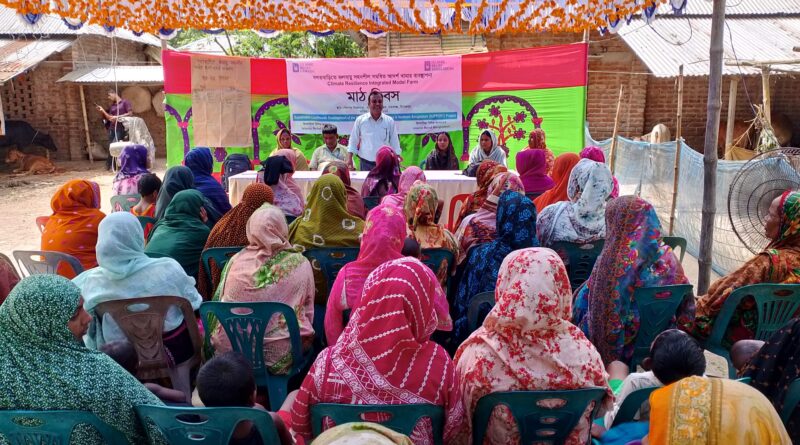
A Farmers’ Filed Day was organized through the Shahnagar Self Help Group (SHG) to disseminate the Climate Resilient Farm technologies to wider community people, with the participation of community members and the Upazila Livestock Officer. In the field day 55 no. of community people who are completely engaged with farming.
The objective of the field day was to disseminate the learnings and results of the Resilient Farm Model demonstration to the wider community, encouraging adoption of low-cost, climate-smart technologies that improve food security, income, and resilience.
Key Components Demonstrated & shared the result: Improved Poultry Rearing (Hazol Method): Reduced chick mortality, better hatching, vaccination practices., Improved Goat Rearing (Raised Shed): Hygienic housing, proper feeding with Napier/Maize, vaccination and deworming, Fodder Cultivation & Silage preparation: Ensured year-round feed availability using simple, low-cost methods. Homestead Gardening: Raised beds, drip irrigation, mulching, drought/flood-tolerant crops, and Integrated Pest Management (IPM), Vermicomposting: Improved soil fertility and reduced chemical dependency.
Key Learnings shared: Farmers recognized the potential of integrated practices to enhance livestock productivity, secure food supply, and diversify household income, Silage and fodder production highlighted solutions to feed shortages during lean seasons, Vermicomposting and climate-smart gardening demonstrated sustainable crop production and better nutrition’s-based dissemination created awareness among wider community members, with adoption expected to increase gradually.